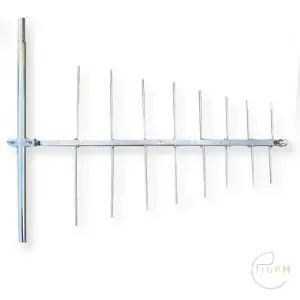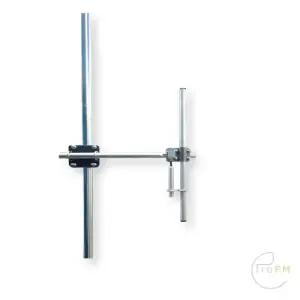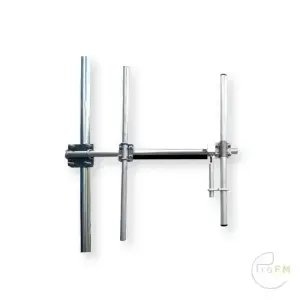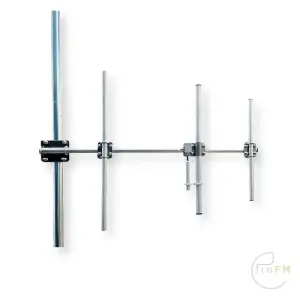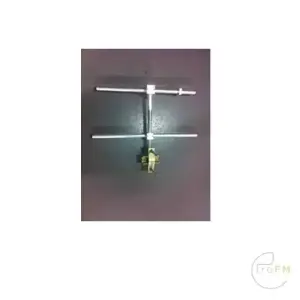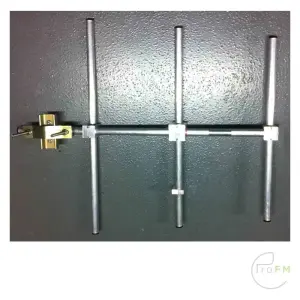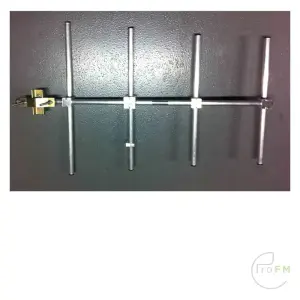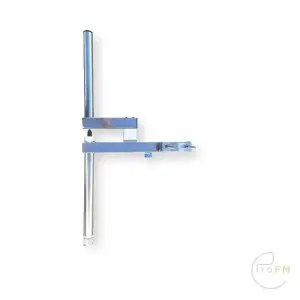
Pro FM BBDAB1 DAB Broadband Dipole Antenna
€ 349,00 EX VAT

A professional transmitting antenna is essential for reliable digital radio broadcasting.
At ProFM Broadcast, we offer DAB antennas, DAB+ antenna solutions and professional broadcast antenna equipment for digital radio transmitters, transmission sites and broadcasting networks.

Digital Audio Broadcasting requires a carefully designed antenna system to deliver reliable radio coverage. Therefore, selecting the right antenna system is an important part of every professional digital radio installation.
Unlike consumer receiving antennas, professional DAB broadcast antennas are designed to radiate radio frequency energy from a transmitter into the intended service area. As a result, their electrical and mechanical characteristics directly influence the performance of the broadcasting network.
Whether you are installing a local DAB+ transmitter, expanding an existing digital radio network or upgrading a broadcast antenna system, ProFM Broadcast can help you explore suitable equipment for your installation.
A DAB antenna is an antenna designed to operate within the frequency range used for Digital Audio Broadcasting. In professional broadcasting installations, transmitting antennas radiate the digital radio signal generated by a DAB or DAB+ transmitter.
In Europe, DAB broadcasting normally operates in VHF Band III, covering frequencies from approximately 174 to 240 MHz. Therefore, a professional transmitting antenna must be suitable for the assigned frequency block and the required transmitter configuration.
Furthermore, the antenna influences the direction, polarisation and distribution of the transmitted signal. Consequently, antenna selection plays an important role in achieving reliable reception throughout the intended coverage area.
Professional broadcast antennas are commonly installed on broadcasting towers, rooftops and other elevated structures. However, the most suitable installation depends on local geography, transmitter power and network planning.
Different DAB broadcast antenna designs provide different radiation characteristics. Therefore, broadcasters should select an antenna configuration according to their coverage requirements and available installation space.
Omnidirectional DAB antennas are designed to provide approximately uniform coverage around the transmission site in the horizontal plane.
For example, an omnidirectional antenna system can be suitable when a broadcaster needs to reach listeners in several directions around a centrally located transmitter.
However, the actual radiation pattern depends on the antenna design, mounting arrangement and surrounding structures.
Directional DAB antennas concentrate more of their radiated energy towards selected directions. As a result, broadcasters can shape coverage towards the intended service area.
For example, directional antennas may be useful when a transmission site is located near the edge of a coverage region. In addition, directional radiation patterns can help engineers manage unwanted signal radiation outside the planned service area.
A DAB dipole antenna is a common building block in professional VHF broadcast antenna systems. Dipole elements can be used individually or combined into larger antenna arrays.
Furthermore, multiple DAB dipole antennas can be arranged to achieve specific gain and radiation characteristics. However, the final performance depends on the element spacing, feeding arrangement and mechanical installation.
Professional DAB+ dipole antenna systems may be configured for different polarisation and coverage requirements. Therefore, engineers should evaluate the complete antenna system rather than considering individual elements alone.
Panel antennas and Yagi antenna designs can provide directional radiation characteristics for suitable VHF applications.
However, not every panel or Yagi antenna is suitable for professional DAB transmission. In particular, the antenna must support the required frequency range, RF power and installation conditions.
Consequently, broadcasters should always verify the manufacturer’s technical specifications before using these antenna types in a digital radio transmission system.
Professional DAB+ broadcasting in Europe uses VHF Band III. This frequency range is divided into designated DAB frequency blocks, which are assigned according to national and regional frequency planning.
Therefore, a DAB+ antenna must operate efficiently across the required frequency block or frequency range.
Some antenna designs cover a relatively narrow frequency range, while others provide broadband operation across a larger part of VHF Band III.
Furthermore, antenna bandwidth becomes particularly important when a broadcaster plans to operate several digital radio multiplexes through a shared antenna installation.
However, the antenna system must also be compatible with the transmitter output, RF filtering and any combining equipment used at the site.
Antenna gain is an important technical specification when selecting a professional DAB antenna. It describes how the antenna concentrates radiated energy in particular directions compared with a reference antenna.
Gain is commonly expressed in dBi or dBd. However, these values use different references and should not be compared without conversion.
For example, an antenna array with greater gain in the horizontal plane may help concentrate the available transmitter power towards the intended coverage area.
Nevertheless, higher antenna gain does not automatically produce better coverage in every installation. Engineers must also consider the vertical radiation pattern, installation height and geographical conditions.
The horizontal radiation pattern describes how the antenna distributes energy around the transmission site. Meanwhile, the vertical radiation pattern describes the distribution of energy above and below the horizontal plane.
Both characteristics influence the resulting coverage area. Therefore, professional antenna planning should consider the complete radiation pattern rather than transmitter output power alone.
Polarisation describes the orientation of the electric field of a radio signal. Professional DAB broadcast antenna systems may use vertical, horizontal or other specified polarisation configurations.
For example, vertical polarisation is commonly used in mobile broadcasting applications because it can be suitable for reception with vertically oriented antennas.
However, the required polarisation depends on the network design and applicable technical requirements.
Consequently, broadcasters should verify the planned polarisation before selecting a DAB transmitting antenna.
Professional transmitting antennas must safely handle the RF power delivered by the broadcasting transmitter. Therefore, antenna power ratings are essential when designing a DAB+ transmission installation.
For example, a higher-power transmitter may require an antenna system with suitable power handling, connectors and feeder cables.
In addition, impedance matching helps transfer RF energy efficiently between the transmitter, transmission line and antenna.
Many professional broadcast systems use a nominal impedance of 50 ohms. However, the specifications of the individual antenna and associated equipment must always be checked.
Furthermore, engineers should consider return loss or voltage standing wave ratio, commonly known as VSWR, when evaluating the complete RF installation.
Selecting the right antenna system requires more than choosing a suitable frequency range. In particular, broadcasters must evaluate several technical and operational factors.
First, verify that the antenna supports the assigned DAB frequency block. In addition, consider whether future network expansion may require a wider operating bandwidth.
Next, determine whether omnidirectional or directional coverage is required. For example, the location of the transmitter site may influence the preferred radiation pattern.
Check the RF power handling of the antenna and associated components. Furthermore, ensure that connectors, feeder cables and other RF components are suitable for the installation.
Consider the required antenna gain, radiation pattern and polarisation. These characteristics should match the planned coverage area and the technical requirements of the broadcasting network.
Finally, evaluate the mounting arrangement, wind loading and environmental conditions. Professional broadcast antennas must be suitable for the intended tower or rooftop installation.
In addition, outdoor installations require appropriate grounding, lightning protection and compliance with applicable safety regulations.
Professional DAB antennas support a wide range of digital radio broadcasting applications. Their configuration depends on the network size, transmitter locations and coverage requirements.
At ProFM Broadcast, we understand the importance of reliable antenna systems for professional digital radio transmission. Therefore, we focus on broadcast equipment designed for demanding radio applications.
Whether you need a DAB dipole antenna, a directional DAB broadcast antenna or a complete DAB+ antenna system, selecting the correct equipment is essential for achieving the intended coverage.
Furthermore, antenna selection should always be considered together with the transmitter, RF feeder system and overall network design.
Our experience with professional radio broadcasting equipment allows us to help customers evaluate their technical requirements and explore suitable antenna solutions.
Looking for a professional DAB antenna? Explore the available products in this category or contact ProFM Broadcast for assistance with your DAB+ broadcasting installation.
Showing all 9 results