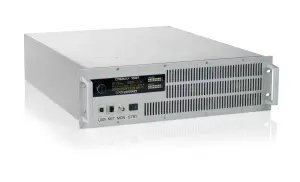
Electrolink 3B0K1 DAB+ Transmitter 150 Watt
Call for price

A professional DAB transmitter is an essential component of modern digital radio broadcasting.
At ProFM Broadcast, we offer DAB transmitters, professional DAB+ transmitter solutions and digital radio transmission equipment for broadcasters, radio stations and network operators.

Digital Audio Broadcasting has transformed the way radio programmes reach listeners. Instead of transmitting individual analogue FM signals, DAB technology uses digital transmission techniques to deliver multiple radio services through a digital radio multiplex.
As a result, broadcasters can distribute several radio programmes using a shared digital transmission system. Furthermore, DAB+ technology offers efficient audio encoding and additional possibilities for digital programme information.
Whether you are planning a new digital radio station, expanding an existing broadcast network or replacing older transmission equipment, choosing the right DAB transmitter is an important technical decision.
A DAB transmitter converts a digital broadcast signal into a radio frequency signal suitable for transmission through an antenna system. In a professional digital radio network, the transmitter receives a prepared multiplex signal and broadcasts it on the assigned frequency.
Unlike a conventional FM transmitter, a DAB radio transmitter can carry multiple programme services within a single digital multiplex. Consequently, several radio stations may share the same transmission infrastructure.
In addition, digital broadcasting supports programme-related information and data services. However, the available features depend on the multiplex configuration, broadcasting equipment and receiving devices.
Professional DAB transmitters are designed for continuous operation and reliable signal transmission. Therefore, they are suitable for commercial broadcasters, community radio networks and professional digital radio installations.
Although the terms DAB and DAB+ are often used together, they refer to different audio service technologies within the Digital Audio Broadcasting family.
Traditional DAB audio services use MPEG Layer II audio encoding. In comparison, DAB+ uses HE-AAC audio coding, which generally provides better coding efficiency at lower bitrates.
However, both technologies use the underlying DAB transmission system. Therefore, the difference between DAB and DAB+ is primarily related to the audio services carried within the digital multiplex rather than a completely different radio frequency transmission method.
A professional DAB+ transmitter can broadcast a multiplex containing appropriately configured DAB+ services. Nevertheless, compatibility with the multiplex distribution system and network configuration must always be verified.
Modern DAB+ broadcasting offers several important advantages for radio broadcasters and digital radio network operators:
Furthermore, DAB+ broadcasting can support both regional and national radio networks. However, the actual coverage and reception quality depend on transmission power, antenna systems, terrain and network planning.
Professional DAB broadcast transmitter equipment is developed for reliable operation in demanding broadcasting environments. In particular, radio network operators require stable RF performance, suitable input interfaces and dependable monitoring capabilities.
At ProFM Broadcast, we focus on professional digital radio transmitter solutions for broadcasters and transmission service providers.
Our range includes equipment from brands such as AVT, Eletrolink and ProFM. Depending on the selected model, different transmitter configurations and technical capabilities may be available.
Therefore, customers should compare the specifications of individual products before choosing equipment for a particular installation.
One of the most important considerations when selecting a DAB transmitter is the required transmission power. However, transmitter output power alone does not determine the coverage of a digital radio network.
For example, antenna gain, feeder losses, installation height and geographical conditions all influence the resulting coverage area.
In addition, network planning must consider interference, frequency assignments and the reception requirements of the intended service area.
Low-power DAB transmitters can be suitable for smaller coverage areas, technical testing and certain local digital radio applications. However, the permitted operating conditions depend on national broadcasting regulations.
For example, a local digital radio installation may require a compact transmitter with efficient operation and straightforward remote management.
Medium- and high-power DAB transmitters are used where larger coverage areas or more demanding transmission requirements apply.
Such installations may require additional infrastructure, including suitable antenna systems, RF filtering, cooling and electrical power capacity.
Furthermore, professional network operators often consider redundancy and remote supervision to support continuous broadcasting operations.
A professional DAB transmitter requires a suitable digital input signal from the multiplex generation or distribution system.
Traditionally, DAB networks have used ETI, or Ensemble Transport Interface, for transporting multiplex information between broadcasting equipment.
However, modern digital radio networks may also use EDI, or Encapsulation of DAB Interfaces, for distributing multiplex information across IP networks.
Consequently, EDI can provide flexibility when connecting multiplex equipment and transmitter sites through suitable network infrastructure.
Nevertheless, not every DAB transmitter supports the same input interfaces. Therefore, broadcasters should verify ETI, EDI and other supported input options before purchasing a transmitter.
Digital Audio Broadcasting supports Single Frequency Network operation, commonly known as SFN. In an SFN, multiple transmitters broadcast the same digital ensemble on the same assigned frequency.
As a result, broadcasters can extend their coverage without assigning a separate frequency to every transmitter site.
However, successful SFN operation requires accurate timing and appropriate network planning. In particular, transmitter synchronisation and signal delay management are important considerations.
Professional DAB transmitter installations may therefore require suitable timing references and compatible multiplex distribution equipment.
Furthermore, engineers must evaluate the geographical arrangement of transmitter sites to minimise unwanted interference and maintain reliable reception.
When selecting a DAB+ transmitter, broadcasters should evaluate several technical and operational requirements. In particular, the transmitter must be compatible with the intended digital radio network.
First, determine the required transmitter power based on the planned coverage area and antenna installation. In addition, consider the effective radiated power permitted under the applicable broadcasting licence.
Next, check whether the transmitter supports the required multiplex input format. For example, some installations use EDI over IP, while others rely on different interfaces or additional conversion equipment.
DAB broadcasting normally operates in VHF Band III in European digital radio networks. Therefore, the transmitter must support the assigned frequency block and relevant operating parameters.
Many broadcast transmitter sites operate without permanent technical staff. Consequently, remote monitoring and management capabilities can simplify maintenance and troubleshooting.
Depending on the equipment, available functions may include transmitter status information, alarms and remote configuration.
Finally, consider cooling, electrical efficiency and operational reliability. Professional DAB broadcast transmitter equipment should be suitable for the expected operating environment and continuous broadcasting requirements.
Professional DAB radio transmitters are used in different types of digital broadcasting installations. Their applications range from local radio services to larger digital radio transmission networks.
At ProFM Broadcast, professional radio broadcasting is more than simply supplying equipment. Our involvement with Radio 182 reflects our practical interest in broadcasting technology and the continued development of radio transmission systems.
We understand that every digital radio installation has different requirements. Therefore, choosing suitable DAB transmitter equipment requires attention to network design, signal distribution and operational reliability.
Our product range includes professional DAB transmitters and related broadcasting equipment from manufacturers such as AVT, Eletrolink and ProFM.
Whether you need a DAB radio transmitter for a local digital radio project or a DAB+ transmitter for a larger broadcast installation, we can help you evaluate suitable equipment for your application.
Looking for a professional DAB transmitter?
Explore the products in this category or contact ProFM Broadcast for assistance with your digital radio broadcasting project.
Showing all 5 results

Protected by Security by CleanTalk