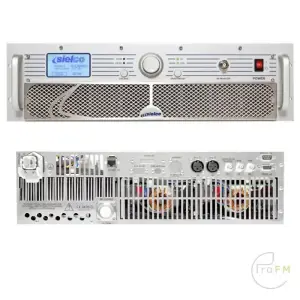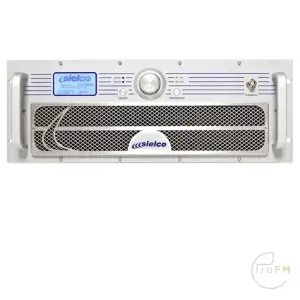
SielCo RFB1000GX FM Amplifier 1 KW / 1000 Watts
€ 3.649,00 EX VAT

 A professional FM transmitter amplifier increases the RF output power of an FM exciter or low-power transmitter. Therefore, it plays an important role in professional radio broadcasting systems. An FM broadcast transmitter amplifier provides additional RF power for transmission applications. Similarly, an FM transmitter power amplifier must match the technical requirements of the connected equipment and antenna system.
An RF amplifier for FM transmitter applications supports professional broadcast installations that require higher transmitter output power. However, transmitter power alone does not determine the coverage area. Antenna height, antenna gain, terrain and licensing conditions also influence the final result.
Professional FM RF amplifiers increase the power of radio-frequency signals within the FM broadcast band. First, the amplifier receives a suitable RF signal from an FM exciter. It then increases the signal power to the required output level.
An FM transmitter amplifier must operate correctly with the exciter, transmission line and antenna system. Therefore, proper installation is essential for reliable performance. Correct input levels and impedance matching also help prevent equipment damage.
In addition, many professional RF amplifiers include monitoring and protection features. Depending on the model, these may include temperature monitoring, reflected power protection and automatic output power reduction.
An FM broadcast transmitter amplifier increases the RF power available from a compatible FM exciter. As a result, broadcasters can configure their transmission systems for the required output power.
Manufacturers offer different amplifier configurations for professional broadcast applications. For example, some systems use complete rack-mounted amplifiers. Others integrate RF power amplifier modules into larger transmitter installations.
Furthermore, available power levels and protection features vary between manufacturers and models. Therefore, broadcasters should always check the technical specifications before selecting an amplifier.
Choosing the right FM transmitter power amplifier requires careful consideration of several technical factors. These include input drive level, output power, frequency range, efficiency and cooling requirements.
In addition, professional broadcast systems must control unwanted RF emissions. Proper amplifier design and suitable output filtering help achieve this goal. However, operators must also ensure compliance with the applicable broadcasting regulations.
For reliable operation, the amplifier must match the complete RF transmission system. Therefore, always verify the required input power and antenna system specifications.
RF power amplifiers generate heat during normal operation. Consequently, effective cooling is essential for reliable performance and long service life.
Many professional amplifiers use forced-air cooling to maintain suitable operating temperatures. However, cooling methods depend on the amplifier design and output power.
In addition, professional systems may include several protection functions. These can monitor temperature, reflected power and excessive input drive. As a result, the amplifier can reduce its output or shut down when necessary.
When choosing an RF amplifier for FM transmitter installations, start with the available exciter output power. Next, determine the required RF output power and operating frequency. Also check the RF connectors, power supply and cooling requirements.
Furthermore, verify impedance matching and compatibility with the antenna system. Incorrect matching can cause excessive reflected power and reduce reliability.
Finally, consider the applicable broadcasting regulations. Increasing transmitter power does not automatically improve reception everywhere. Instead, effective coverage depends on the complete transmission system.
Explore the professional FM amplification equipment available from ProFM Broadcast. Our product range helps broadcasters find suitable solutions for radio transmission and professional FM installations.
Showing all 5 results
Protected by Security by CleanTalk