
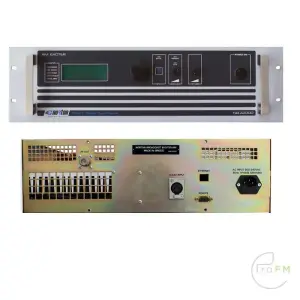
Norton Broadcast NB.Z2000 100W DDS AM Transmitter
€ 2.295,00 EX VAT

Looking for a professional low power AM transmitter for your radio station? ProFM Broadcast offers reliable transmission equipment for medium wave broadcasting, local radio stations, LPAM applications and professional radio projects.

Our product range includes equipment from specialist broadcast manufacturers such as Norton Broadcast and PCS AM MAX. These compact transmitters offer a practical solution for broadcasters who need dependable AM transmission equipment without the complexity of a large, high-power installation.
For example, whether you are establishing a small medium wave radio station, replacing an existing transmitter or developing a new broadcasting project, choosing suitable equipment is essential for reliable operation and consistent transmission quality.
A low power AM transmitter converts an audio programme signal into an amplitude-modulated radio frequency signal for transmission in the AM broadcast band. AM broadcasting commonly uses the medium wave band, and listeners can receive these programmes with conventional AM radios.
These transmitters support a variety of broadcasting applications, depending on local frequency allocations, permitted transmission power and licensing requirements.
Furthermore, compared with larger high-power broadcasting systems, compact AM transmitters offer a more manageable solution for stations with modest transmission requirements. They can also simplify installation planning when space and infrastructure are limited.
Professional AM transmission equipment supports several types of radio broadcasting projects. For example, broadcasters may use these systems for:
However, the achievable coverage area depends on several factors, including transmitter power, antenna efficiency, operating frequency, ground conductivity, interference conditions and regulatory restrictions.
Smaller broadcasting installations can use LPAM equipment without requiring the output power of a large commercial transmission facility. As a result, this type of equipment can provide a practical starting point for local radio services and specialist broadcasting projects.
When selecting equipment for LPAM broadcasting, consider the permitted operating frequency, authorised power level and antenna system at the transmission site.
In addition, different countries apply different rules to low power AM broadcasting. Therefore, always check the relevant national regulations before installing or operating transmission equipment.
A transmitter’s technical capabilities do not automatically mean that operators can use its maximum rated power or operate without a licence.
Several technical factors influence the choice of transmission equipment. In particular, output power, modulation quality, antenna compatibility and operating reliability deserve careful attention.
Your broadcasting application and transmission authorisation determine the required output power. Manufacturers offer different power classes. Therefore, choose equipment that matches your permitted operating conditions.
Furthermore, higher transmitter power does not automatically guarantee better coverage. Antenna efficiency and local propagation conditions also play an important role in overall performance.
Good AM transmission quality depends on suitable audio processing, correct modulation settings and reliable transmitter operation. For this reason, broadcasters should pay attention to the complete audio and transmission chain rather than transmitter specifications alone.
In addition, appropriate audio processing can help maintain clear and intelligible sound while controlling modulation levels.
Moreover, the antenna and matching system are essential parts of any AM broadcasting installation. Antenna efficiency, impedance matching, grounding and site conditions can substantially influence transmission performance.
Therefore, check whether the intended antenna installation meets the technical requirements of the transmitter and complies with the relevant regulations.
When choosing professional broadcasting equipment, consider reliability and operating requirements. For example, review the manufacturer’s specifications for cooling, protection features, power supply and continuous operation.
Additionally, suitable installation conditions and regular maintenance can help support dependable performance over time.
ProFM Broadcast supplies specialist broadcasting equipment for radio stations and transmission projects. Our product range includes professional solutions from manufacturers such as Norton Broadcast and PCS AM MAX.
Explore the available transmitters to compare technical specifications, output power and suitability for your intended application. In addition, consider the requirements of your antenna system and any associated audio processing equipment.
Need help choosing the right equipment? Contact ProFM Broadcast for advice on selecting a suitable solution for your LPAM or medium wave radio broadcasting project.
Showing all 3 results
Protected by Security by CleanTalk
