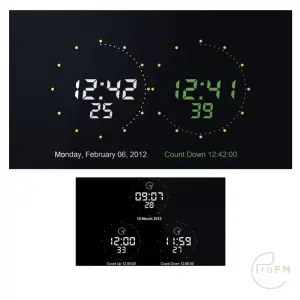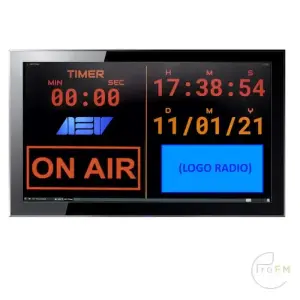
AEV Studio Watch Timer – Clock Software And Monitor
€ 599,00 EX VAT

Professional radio station software is essential for modern broadcasting operations.
At ProFM Broadcast, we offer software solutions for radio automation, audio playout, digital audio processing, streaming and broadcast management.

Modern radio broadcasting depends on reliable applications to manage daily operations, prepare programmes and deliver consistent audio quality. Therefore, choosing suitable software is an important part of building an efficient broadcast environment.
Whether you operate a local FM station, a DAB+ service, an internet radio channel or a professional broadcast network, dedicated applications can simplify production and transmission workflows.
Furthermore, professional software for radio stations can help broadcasters automate repetitive tasks, organise audio content and maintain a consistent on-air presentation.
At ProFM Broadcast, we understand the requirements of professional radio operations. Consequently, we focus on solutions that support practical broadcasting applications, from studio automation to advanced audio processing.
Radio station software includes digital applications designed to support the operation, management and technical performance of radio broadcasting facilities.
Depending on the application, these tools can manage music playlists, automate programme schedules, control audio playback, process sound or distribute radio programmes over the internet.
In addition, software for radio stations can help engineers, presenters and programme managers coordinate different parts of the broadcasting workflow.
For example, a radio automation system may control the playback of music, jingles and advertisements. Meanwhile, a separate audio processing application can optimise the outgoing programme signal.
These systems can operate independently or form part of a larger integrated broadcast installation.
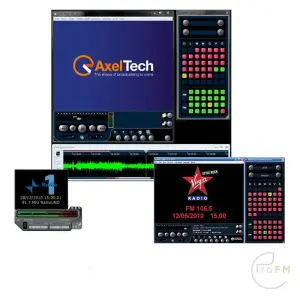
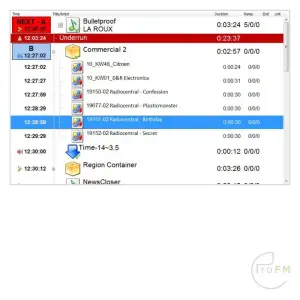
Radio automation software is one of the most important tools in a modern radio studio. It allows broadcasters to prepare and manage programme content while reducing the need for continuous manual operation.
For example, automation systems can organise playlists, schedule programmes and trigger the playback of audio material at predetermined times.
As a result, professional radio station software can help maintain a consistent broadcasting schedule during both staffed and unattended operating hours.
Playlist management is an important function of professional radio automation systems. Broadcasters can prepare music rotations, programme segments and scheduled audio events in advance.
Furthermore, suitable automation applications can help operators maintain a structured programme schedule and reduce repetitive manual tasks.
However, the available scheduling functions depend on the selected software package and its configuration.
Automated radio software can support unattended programme playback when no presenter is physically present in the studio.
For example, a station may use automation to maintain regular programming overnight or during scheduled periods without live presentation.
Nevertheless, reliable unattended operation also depends on appropriate computer hardware, audio interfaces, monitoring and backup arrangements.
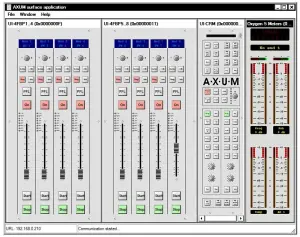
Some professional radio station software supports connections to audio mixers, broadcast controllers and other studio equipment.
Depending on the application, integration may involve network protocols, GPIO interfaces or dedicated hardware drivers.
Therefore, broadcasters should verify compatibility with their existing studio infrastructure before selecting an automation solution.
Professional radio station software often includes dedicated playout applications for managing the audio material used during live and automated programmes. These systems provide reliable access to music, advertisements, jingles and prerecorded content.
Furthermore, dedicated playout applications can help presenters organise audio material and prepare programme sequences.
Professional playout systems allow broadcasters to organise different types of audio content for use during transmission.
For example, presenters may need immediate access to jingles, promotional announcements and prerecorded interviews.
As a result, an organised playout environment can help improve operational efficiency during live programmes.
Depending on the selected application, playout software may support both presenter-controlled and automated playback.
Therefore, radio stations can choose a workflow that matches their programming requirements and staffing arrangements.
In addition, some platforms offer advanced functions such as scheduling, event triggers and integration with other broadcast applications.
Radio broadcasting software supports different stages of the production and transmission process. Consequently, it can be used in small local studios as well as larger professional broadcasting facilities.
For example, a complete studio environment may combine programme automation, audio production tools, processing software and streaming applications.
Furthermore, modern software for radio stations makes it possible to manage many technical and operational functions from standard computer systems.
However, professional broadcasting applications must be selected with attention to reliability, compatibility and the specific requirements of the station.
Audio processing is an important part of professional radio station software and broadcast operations. It helps broadcasters control programme dynamics, manage peak levels and maintain a consistent audio presentation.
Traditionally, many stations relied primarily on dedicated hardware audio processors. Today, software-based audio processing provides an additional option for suitable broadcast applications.
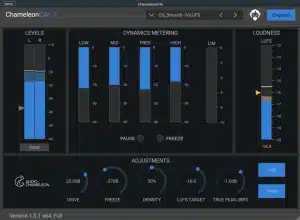
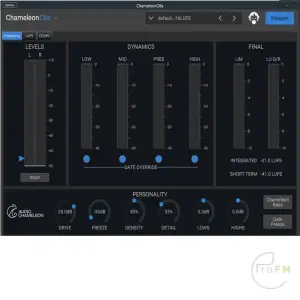
For example, professional audio processing software can perform functions such as multiband compression, limiting, equalisation and stereo processing.
However, the available features and processing performance depend on the selected software and hardware configuration.
Stereo Tool is an example of professional audio processing software used in radio broadcasting and audio streaming applications.
It offers a range of processing functions that can help broadcasters optimise the sound of their programme material.
Depending on the selected version and licence, Stereo Tool can provide advanced audio processing features for different broadcasting workflows.
Furthermore, software-based processing allows broadcasters to use compatible computer hardware as part of their audio processing system.
However, the complete installation must be designed with appropriate audio interfaces, system resources and operational reliability in mind.
One of the main objectives of broadcast audio processing is to maintain a consistent listening experience.
For example, programme material from different sources can vary considerably in loudness, dynamics and frequency balance.
Therefore, suitable processing can help manage these differences while preserving the desired sound character of the station.
For broadcasters evaluating professional radio station software, audio quality and reliable real-time performance are important selection criteria.
Nevertheless, processing settings should be adapted to the transmission platform and the broadcaster’s audio quality objectives.
Modern software for radio stations can also support internet streaming and webcasting. Dedicated streaming applications allow broadcasters to distribute audio programmes online and reach listeners beyond their terrestrial transmission coverage.
For example, an FM or DAB+ station may provide an additional online stream for listeners using smartphones, computers or connected audio devices.
Furthermore, internet-only radio stations can use streaming technology as their primary programme distribution method.
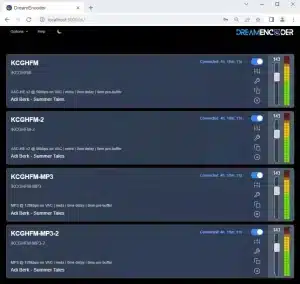
Streaming applications may include audio encoding functions that prepare programme material for internet distribution.
Depending on the system, broadcasters can select suitable audio formats, bitrates and streaming configurations.
For example, MP3 and AAC are commonly used audio formats in internet radio applications.
However, compatibility depends on the streaming platform, encoder configuration and receiving devices.
Some streaming solutions can operate alongside radio automation and playout systems.
For example, a broadcaster may use one automation platform to generate the programme output and a separate encoding application to deliver that audio to an online streaming server.
In addition, compatible radio station software may support programme metadata such as artist names and track titles.
Therefore, broadcasters should consider both audio and metadata requirements when designing their streaming workflow.
Professional radio station software can help broadcasters organise large collections of audio material. Efficient content management is particularly important for stations working with music libraries, interviews, advertisements and prerecorded programmes.
Content management applications can help broadcasters organise and retrieve programme material.
Furthermore, suitable software can simplify the preparation and retrieval of audio content during production.
For example, programme producers may need to locate a particular interview or prerecorded announcement quickly.
However, the available database, search and media management features depend on the selected application.
Choosing suitable software for radio stations requires an understanding of the existing technical infrastructure and daily operational requirements. Broadcasters should therefore evaluate compatibility, reliability, available features and future expansion possibilities.
First, determine whether the software will be used for automation, audio playout, processing, streaming or content management.
Some applications focus on one specific task, while others combine several functions within a single platform.
Next, verify compatibility with the intended computer hardware and operating system.
For example, some applications are designed for Windows, while others support additional operating systems.
Furthermore, audio processing applications may require sufficient CPU resources for reliable real-time operation.
Professional radio installations often use dedicated audio interfaces, network connections and external broadcast equipment.
Therefore, it is important to verify that the selected software supports the required audio drivers, signal formats and control interfaces.
Radio broadcasting frequently requires continuous operation. Consequently, software stability and suitable system maintenance are important considerations.
In addition, broadcasters should evaluate backup arrangements, recovery procedures and available technical support.
Finally, consider the licensing model and available updates when selecting professional radio station software.
Depending on the manufacturer, applications may be supplied with a perpetual licence, subscription or other commercial arrangement.
Therefore, always check the product information for the applicable licensing conditions and supported features.
Radio station software can support different broadcasting platforms, including FM, DAB+ and internet radio. Although the transmission technologies differ, many production, automation and audio management functions are shared across these environments.
For example, an FM station may use automation and audio processing applications to prepare its programme output before transmission.
Similarly, DAB+ broadcasters can use suitable production and playout tools as part of their digital radio infrastructure.
Internet radio stations may combine automation, audio processing and streaming applications to create and distribute their programmes online.
Furthermore, broadcasters operating multiple distribution platforms can use compatible software to support coordinated workflows.
However, each transmission platform has its own technical requirements. Therefore, the complete system should be designed according to the intended application.
At ProFM Broadcast, we offer professional broadcast equipment and software solutions for radio stations, audio production facilities and streaming operations.
Whether you are looking for radio automation software, audio processing applications or tools for internet broadcasting, choosing the right solution can improve the efficiency of your operation.
Furthermore, suitable software can complement professional studio mixers, audio processors, transmission equipment and other broadcast infrastructure.
Our experience in professional radio broadcasting helps us understand the practical requirements of modern radio studios.
Looking for professional radio station software?
Explore the available products in this category or contact ProFM Broadcast for assistance in selecting a suitable solution for your broadcasting application.
Showing 1–12 of 20 results



Protected by Security by CleanTalk