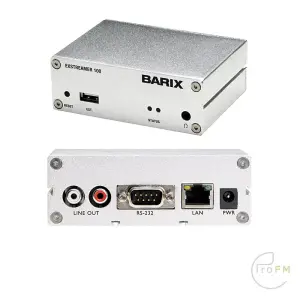
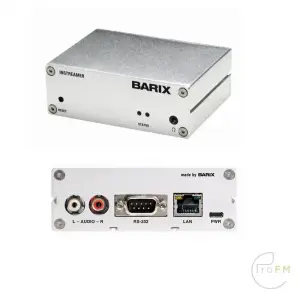
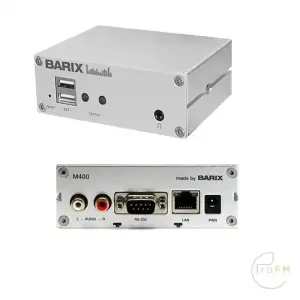
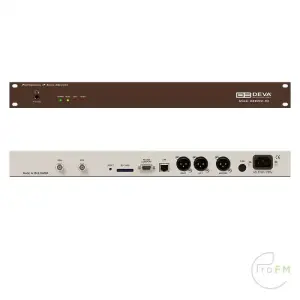
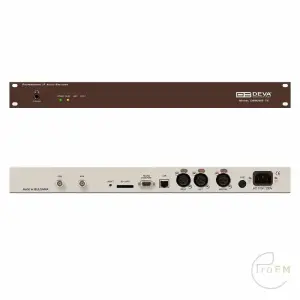
Aqua Broadcast Aqua Tool MicroMPX Decoder
€ 1.990,00 EX VAT

A professional studio transmitter link provides a reliable connection between a radio studio and its transmitter site.
At ProFM Broadcast, we offer studio transmitter link equipment, professional IP audio codec solutions and broadcast audio transmission systems for radio stations and broadcasting facilities worldwide.

Modern radio broadcasting depends on reliable audio transmission between studios, transmitter locations and other broadcast facilities. Therefore, choosing the right connection technology is essential for maintaining consistent audio quality and uninterrupted broadcasting operations.
Traditionally, broadcasters used dedicated radio frequency links to transport audio signals between locations. However, modern IP networks now provide additional possibilities for professional audio transmission. As a result, broadcasters can choose from several technologies according to their technical requirements, available infrastructure and operating budget.
Whether you need a traditional STL link, a modern IP-based connection or a dedicated audio codec, ProFM Broadcast can help you explore suitable equipment for your broadcasting installation.
A studio transmitter link connects a radio station’s studio facilities to its transmission site. Its primary purpose is to transport programme audio reliably from the studio to the equipment responsible for broadcasting the signal.
For example, a radio station may operate its studios in a city centre while placing its FM transmitter on a distant tower. In this situation, a studio transmitter link carries the audio programme between both locations.
Depending on the installation, broadcasters may use dedicated wireless links, fibre connections, leased data circuits or IP-based transmission systems.
Furthermore, professional studio transmitter link equipment can support reliable audio delivery and simplify the management of broadcasting installations.
Broadcast engineers can choose from several technologies when establishing a connection between their studio and transmitter site. However, each solution has different technical characteristics and infrastructure requirements.
Traditional wireless STL systems transport audio using dedicated radio frequency connections. Depending on the equipment and frequency allocation, these systems may operate in VHF, UHF or microwave frequency bands.
Such connections can be useful when a dedicated point-to-point radio link is available. However, their installation may require suitable antennas, sufficient signal coverage and appropriate frequency authorisation.
In addition, engineers must consider antenna positioning, path clearance and local radio regulations when designing a wireless STL link.
A studio transmitter link over IP uses an IP network to transport programme audio between broadcasting locations. For example, broadcasters may establish these connections through dedicated networks, managed data services or suitable internet connections.
Consequently, an IP-based STL link can offer greater flexibility when connecting studios, transmitter sites and remote broadcasting facilities.
Furthermore, modern IP transmission equipment may provide features such as audio encoding, buffering, connection monitoring and automatic network recovery. However, the available functions depend on the selected hardware.
An IP audio codec converts audio into a format suitable for transmission across an IP network. At the receiving location, a compatible decoder reconstructs the audio signal for further processing or broadcasting.
Professional IP audio codec equipment is widely used for studio transmitter connections, remote broadcasting and programme distribution between radio facilities.
For example, an audio IP codec can transport programme audio from a broadcasting studio to a remote transmitter installation. As a result, stations can establish reliable connections without relying exclusively on traditional radio frequency links.
In addition, some audio over IP codec systems support multiple encoding formats, redundant network connections and remote configuration. Nevertheless, broadcasters should always verify compatibility between the transmitting and receiving devices.
Professional IP-based audio connections offer several potential advantages for modern radio broadcasting installations:
However, reliable IP audio transmission also depends on network stability, sufficient bandwidth and appropriate latency management. Therefore, engineers should evaluate the complete network environment before selecting an audio transport solution.
MPX over IP provides another approach to transporting signals between an FM broadcast studio and its transmitter site. Unlike conventional audio transport, MPX transmission can carry a composite FM multiplex signal over a suitable IP connection.
This approach can be particularly useful when a broadcaster wants to generate the FM multiplex signal at the studio and deliver it to a remote transmitter location.
Depending on the equipment, an MPX over IP system may support the transport of stereo multiplex information and additional components such as RDS.
However, MPX transport has different bandwidth, timing and signal requirements compared with conventional audio codec transmission. Therefore, broadcasters should choose equipment specifically designed for their intended MPX application.
Selecting suitable studio transmitter link equipment requires careful consideration of the complete broadcasting installation. In particular, engineers should evaluate the connection type, audio requirements and operating conditions.
First, determine whether a traditional wireless STL link or an IP-based system is the most suitable option. For example, an existing dedicated IP connection may simplify installation, while a wireless link may offer an alternative where suitable network infrastructure is unavailable.
Next, consider the required audio quality and supported encoding formats. Some installations use uncompressed audio, while others benefit from compressed transmission formats that reduce network bandwidth requirements.
Furthermore, check whether the selected IP audio codec supports the required sample rates, audio interfaces and transmission protocols.
Reliable broadcasting requires consistent signal delivery. Therefore, engineers should consider network availability, latency, packet loss and suitable backup arrangements.
For example, a professional STL installation may use a secondary connection to maintain programme delivery when the primary network becomes unavailable.
Many transmitter installations operate without permanent technical staff on site. Consequently, remote monitoring and configuration capabilities can simplify maintenance and troubleshooting.
When comparing equipment, check whether the manufacturer provides suitable management interfaces, connection status information and alarm functions.
Finally, verify compatibility with the existing audio processing equipment, broadcast automation system and transmitter installation.
For example, engineers should check whether the required analogue, AES/EBU or other digital audio interfaces are available. In addition, MPX applications may require dedicated composite signal interfaces.
Professional studio transmitter link equipment supports a wide range of broadcasting applications. In particular, broadcasters use these systems to establish dependable connections between different technical locations.
ProFM Broadcast supplies professional equipment for radio broadcasting, audio transmission and transmitter installations. Our range of studio transmitter link equipment includes solutions for different broadcasting requirements and network environments.
Whether you need a professional IP audio codec, an STL over IP connection or equipment for traditional broadcast links, selecting the right system is essential for reliable programme distribution.
In addition, our experience with professional broadcasting equipment allows us to help customers evaluate technical requirements and compare suitable transmission solutions.
Looking for studio transmitter link equipment or a professional IP audio codec? Explore the available products in this category or contact ProFM Broadcast for assistance with your broadcast audio transmission project.
Showing 1–12 of 37 results



Protected by Security by CleanTalk